
 The Collab Journal
By Minerva Acevedo, MACP, MBA, BBA, RP — Registered Psychotherapist
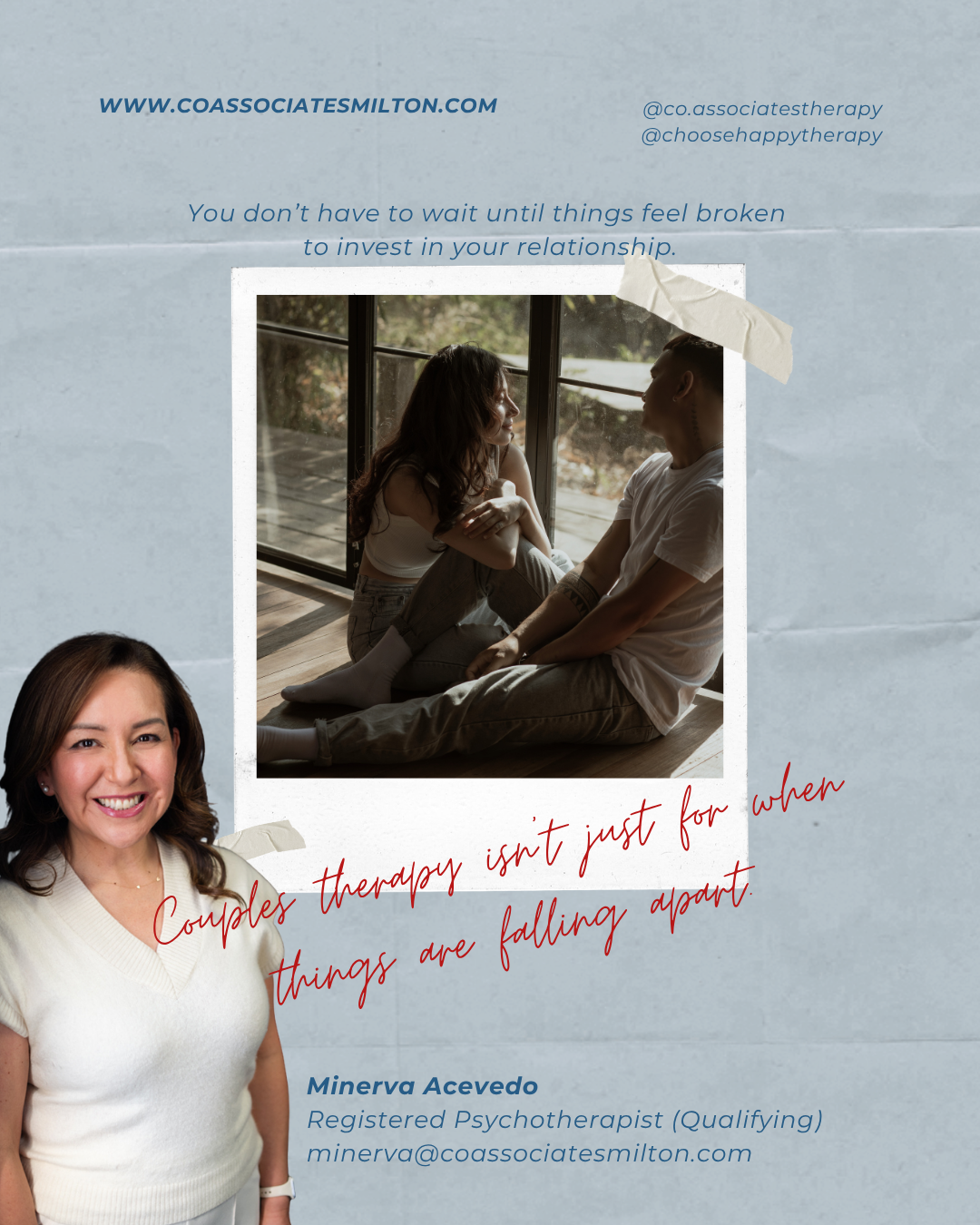
When couples begin searching for couples therapy in Milton, Halton Region, or the Greater Toronto Area (GTA), it’s often during moments of distress—after repeated arguments, emotional disconnection, or when the relationship feels like it’s nearing its breaking point.
But from a clinical perspective, this is only one part of the story.
Couples therapy is not just for relationships in crisis. In fact, some of the most impactful work in relationship counselling across Ontario happens when couples seek support while things are still good—or even just okay.
The Best Time to Go to Couples Therapy: Earlier Than You Think
If you’re wondering “when should we go to couples therapy?”—the answer is often sooner than expected.
Relationships are shaped by underlying patterns such as:
communication habits
attachment styles
emotional regulation
family-of-origin experiences
These patterns exist long before conflict becomes visible.
Seeking couples counselling in Milton or the GTA early allows partners to:
Strengthen communication before issues escalate
Deepen emotional connection
Identify patterns before they become entrenched
Align on long-term goals and values
This is known as preventative couples therapy, and it is one of the most effective ways to build a resilient relationship.
Is Couples Therapy Only for Struggling Relationships?
A common misconception across many couples seeking marriage counselling in Halton Region and Ontario is that therapy is only necessary when things are falling apart.
By the time many couples begin therapy, they may already be experiencing:
ongoing communication breakdowns
emotional distance
recurring conflict cycles
unresolved resentment
At this stage, therapy often focuses on both repair and stabilization.
While this work is essential, engaging in couples therapy earlier in Ontario allows partners to build skills from a place of connection rather than crisis.
Couples Therapy as Preventative Relationship Care
Just as individuals prioritize physical health, relationships benefit from proactive care.
Couples therapy in Milton, Halton, and the GTA can help:
1. Explore Childhood Experiences and Attachment Patterns
Each partner brings their own relational blueprint shaped by early life experiences.
Even without significant trauma, these experiences influence:
how partners communicate
how conflict is managed
how emotional needs are expressed
Working with a registered psychotherapist or social worker in Ontario allows couples to understand these patterns in a supportive, structured way.
2. Blend Two Lived Experiences Into One Shared Relationship
A long-term relationship requires intentional integration.
Partners often differ in:
cultural backgrounds
family expectations
financial perspectives
communication styles
Without clear conversations, these differences can lead to misunderstandings over time.
Couples therapy supports partners in developing:
shared values
aligned expectations
sustainable relationship dynamics
Preparing for Life Transitions in Ontario Relationships
Many couples seek relationship counselling in the GTA and Halton Region during major life transitions.
However, therapy can also be used proactively to prepare for:
navigating in-laws and extended family relationships
transitioning into parenthood
managing financial stress and decision-making
coping with illness, grief, or unexpected change
Couples therapy helps partners build the tools needed to navigate these transitions with connection, clarity, and resilience.
Strengthening Communication and Emotional Intimacy
One of the most common reasons couples seek therapy in Milton and across Ontario is to improve communication.
Even in healthy relationships, partners can experience:
misunderstandings
difficulty expressing needs
emotional disconnection over time
Approaches such as Emotionally Focused Therapy (EFT)—widely used in couples therapy across Ontario—help partners:
increase emotional awareness
strengthen secure attachment
improve communication and connection
“We’re Doing Fine—Do We Still Need Couples Therapy?”
Many couples across Milton, Halton, and the GTA ask this question.
The answer is simple: therapy is not only for when something is wrong.
Seeking support during stable periods reflects:
emotional awareness
commitment to long-term relationship health
a desire for growth, not just repair
This shifts therapy from a reactive step to a proactive investment in your relationship.
The Goal of Couples Therapy Isn’t Perfection
No relationship is without conflict.
The goal of couples counselling in Ontario is to help partners:
navigate conflict more effectively
repair after disconnection
maintain emotional connection during stress
Research consistently shows that the ability to repair and respond emotionally is more important than avoiding conflict altogether.
Final Thoughts: Investing in Your Relationship in Milton, Halton & the GTA or across Ontario.
Whether you are actively searching for:
couples therapy in Milton Ontario
relationship counselling in Halton Region
couples therapy in the GTA
…it’s important to know that you don’t have to wait until things feel broken.
Couples therapy offers a space to:
deepen connection
strengthen communication
build a relationship that can navigate both challenges and meaningful life experiences
Because the real question isn’t just:
“When should we go to couples therapy?”
It’s: “What kind of relationship do we want to build for the life ahead?”
This article is intended for educational and informational purposes only. It is not a substitute for therapy, counselling, or individualized mental health care. Everyone's experiences are unique, and support that works for one person may not be right for another. If you're struggling, we encourage you to seek professional support that fits your needs.
Related Articles
When Starting Over Comes With More Than You Expected: Mental Health, Immigration, Identity & Belonging
Navigating a new chapter comes with hidden grief and complex identity shifts. Discover how therapy can support your journey of belonging.
Suicide Prevention Awareness Month: Sometimes the Most Important Thing We Can Do Is Ask
Learn how to spot hidden signs of distress, navigate difficult conversations, and support loved ones during Suicide Prevention Awareness Month.
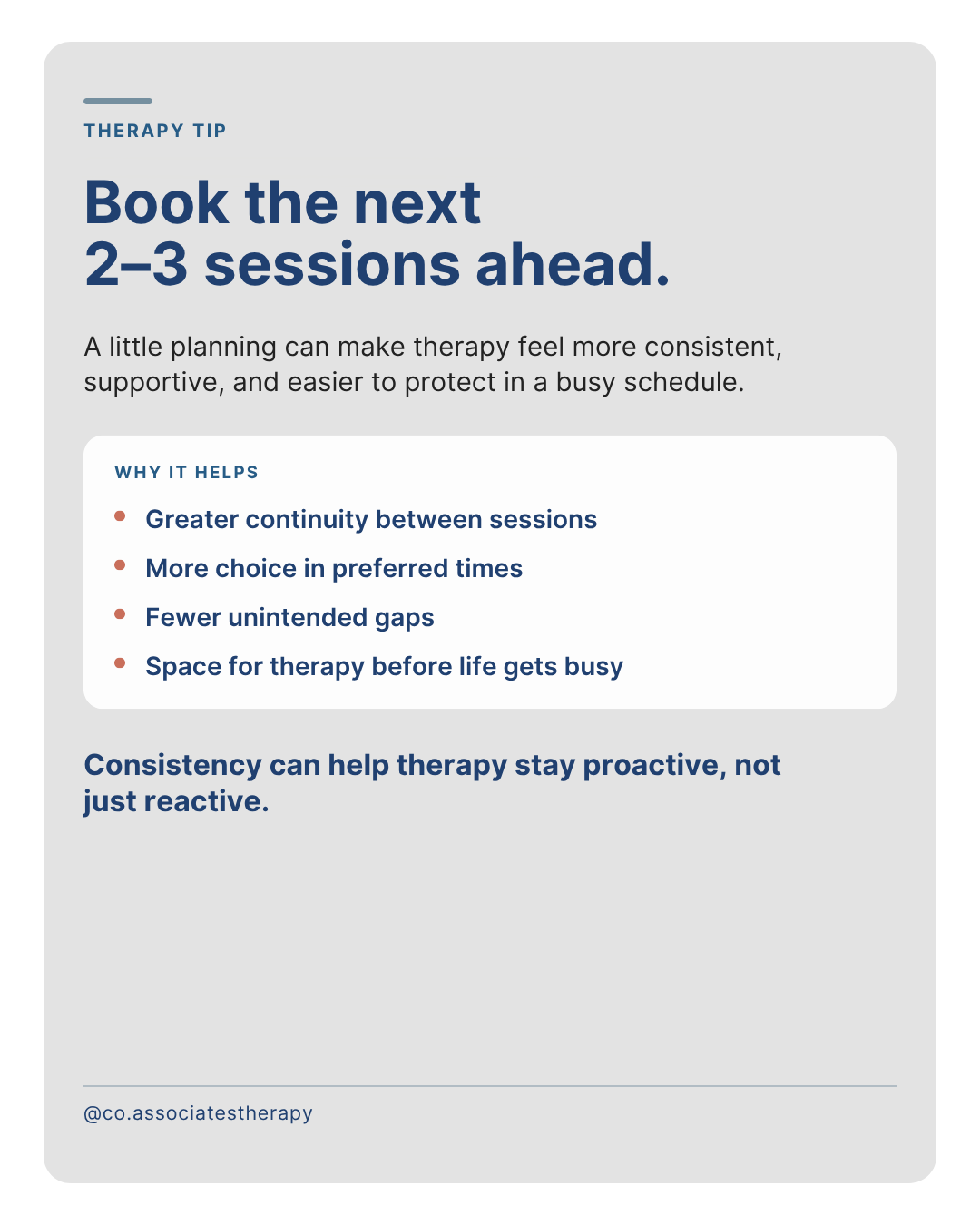
Why Booking Therapy Ahead Can Actually Help Therapy Work Better
One of the things we sometimes encourage clients to do is book a few therapy sessions in advance. And we also understand why people hesitate. Life is busy. Work...