
 The Collab Journal
By Garion Sparks-Austin, BSW, RSW — Registered Social Worker, Psychotherapist
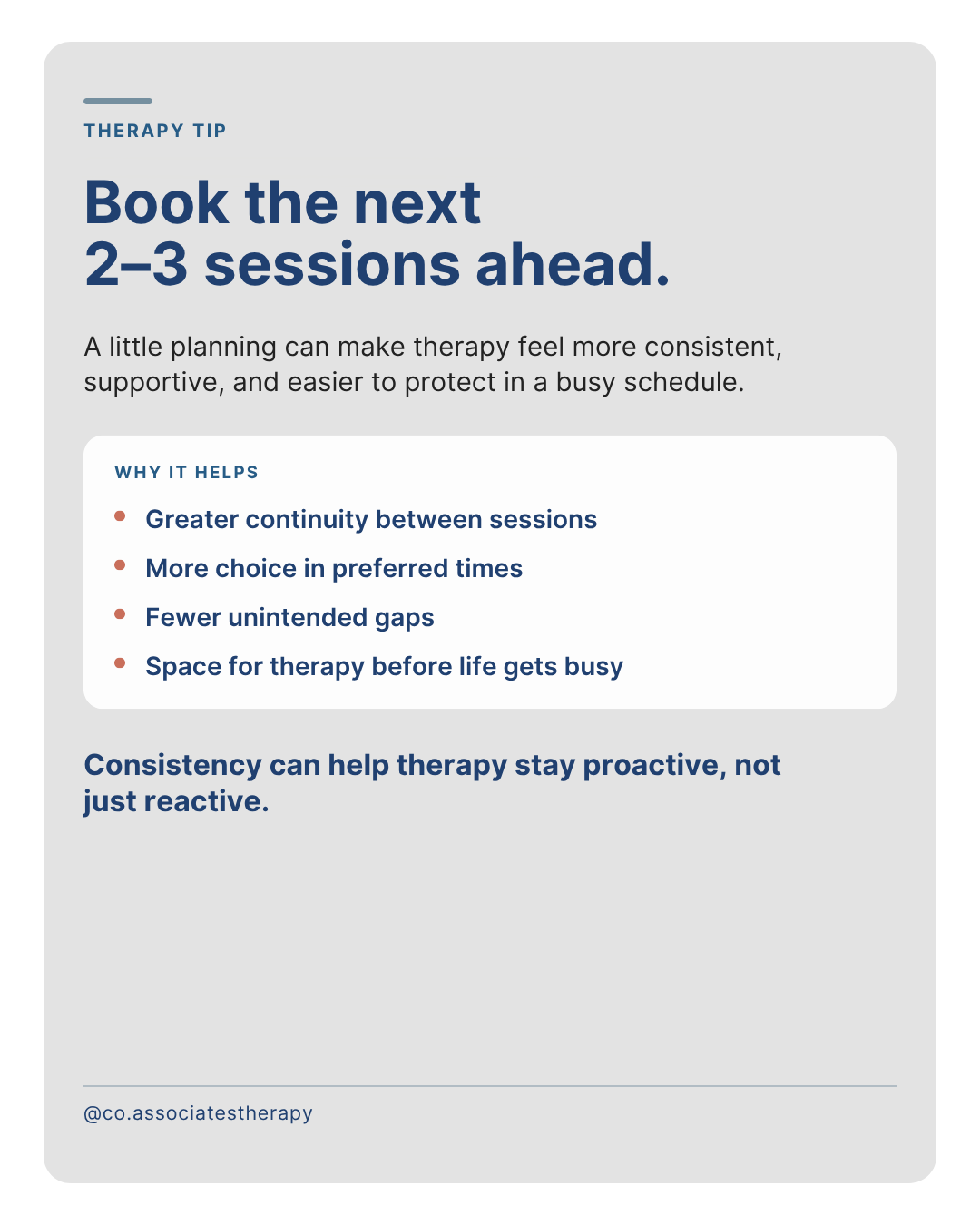
One of the things we sometimes encourage clients to do is book a few therapy sessions in advance. And we also understand why people hesitate. Life is busy. Work schedules change. Kids get sick. Meetings come up. Sometimes you genuinely don’t know what your life is going to look like three weeks from now.
There can also be another hesitation that people don’t always say out loud:
What am I going to talk about if I book that many appointments?
Or even:
Does booking several therapy sessions mean there’s something really wrong with me?
Not at all.Sometimes booking therapy ahead is simply good planning.
Therapy doesn’t have to be reserved for when something is wrong.
There’s a common tendency to think about therapy reactively. Something happens, we become overwhelmed, a relationship becomes difficult, anxiety increases—and then we think, I should probably book an appointment.
Therapy can absolutely be there for those moments.
But some of the most meaningful therapeutic work can also happen when we’re not in crisis. Those quieter sessions give us room to notice patterns, understand ourselves differently, work on relationships, practise new ways of responding, or simply check in with how life is actually feeling. You don’t need to arrive at every appointment with a problem to solve or a list of things to talk about.
Sometimes we discover what needs our attention once we have the space to slow down.
Booking ahead creates continuity.
When appointments are booked one at a time, it’s surprisingly easy for a week or two to turn into a month.
You finish a session intending to book again. Then work gets busy. The kids have activities. You go away. Your therapist’s preferred times fill up. Suddenly, there’s a much longer gap than you intended.
Booking your next two or three sessions ahead can help protect that time before the rest of life fills the calendar.
It also helps ensure continued access to your therapist—particularly if you need evenings, after-school appointments, or another highly requested time.
And no, booking ahead doesn’t mean you’ll need therapy forever.
Therapy is allowed to change as you do.
You might begin weekly, move to biweekly, eventually shift to monthly check-ins, or decide together with your therapist that you’re ready to take a break.
Having appointments scheduled doesn’t mean you’re committing to a particular level of support indefinitely.
It simply creates some structure around the work you’re doing right now.
And if something changes? Talk to your therapist. Therapy should have room for flexibility, too.
Sometimes consistency is part of the work.
We schedule dental appointments months ahead. We register our kids for activities before the season starts. We put important meetings, vacations and commitments into our calendars because we know that if we don’t protect the time, something else will probably take it.
Our emotional health deserves some space on the calendar, too.
So, if therapy is something you want to prioritize right now, consider scheduling your next 2–3 appointments in advance.
Not because something is wrong with you.
Not because you need to have something significant to talk about every time.
And certainly not because therapy needs to become another obligation on your calendar.
Sometimes it’s simply about creating continuity, protecting your preferred appointment times, and making sure there is space waiting for you when you need it.
You don’t always have to know what you’ll need from therapy three weeks from now. Sometimes you just need to make sure there’s room for it.
This article is intended for educational and informational purposes only. It is not a substitute for therapy, counselling, or individualized mental health care. Everyone's experiences are unique, and support that works for one person may not be right for another. If you're struggling, we encourage you to seek professional support that fits your needs.
Related Articles

When Life Feels More Expensive, Support Shouldn’t Be
How Virtual Therapy in Ontario Makes Mental Health Care More Accessible During Financial Stress In recent years, many individuals and families across Ontario ha...

Why Men Benefit from Therapy — And How Virtual Therapy Is Changing the Conversation
Discover how therapy empowers men to navigate unique challenges, build stronger connections, and foster self-understanding. Learn why a supportive, judgment-free space can be truly transformative.

Someone Who Genuinely Wants to See You Win
Meet Sarah Katarincic, a therapist who genuinely believes in your potential. Discover her warm, non-judgmental approach to help you navigate life's challenges and find your path forward. Learn how she can support you.