
 The Collab Journal
By Garion Sparks-Austin, BSW, RSW — Registered Social Worker, Psychotherapist
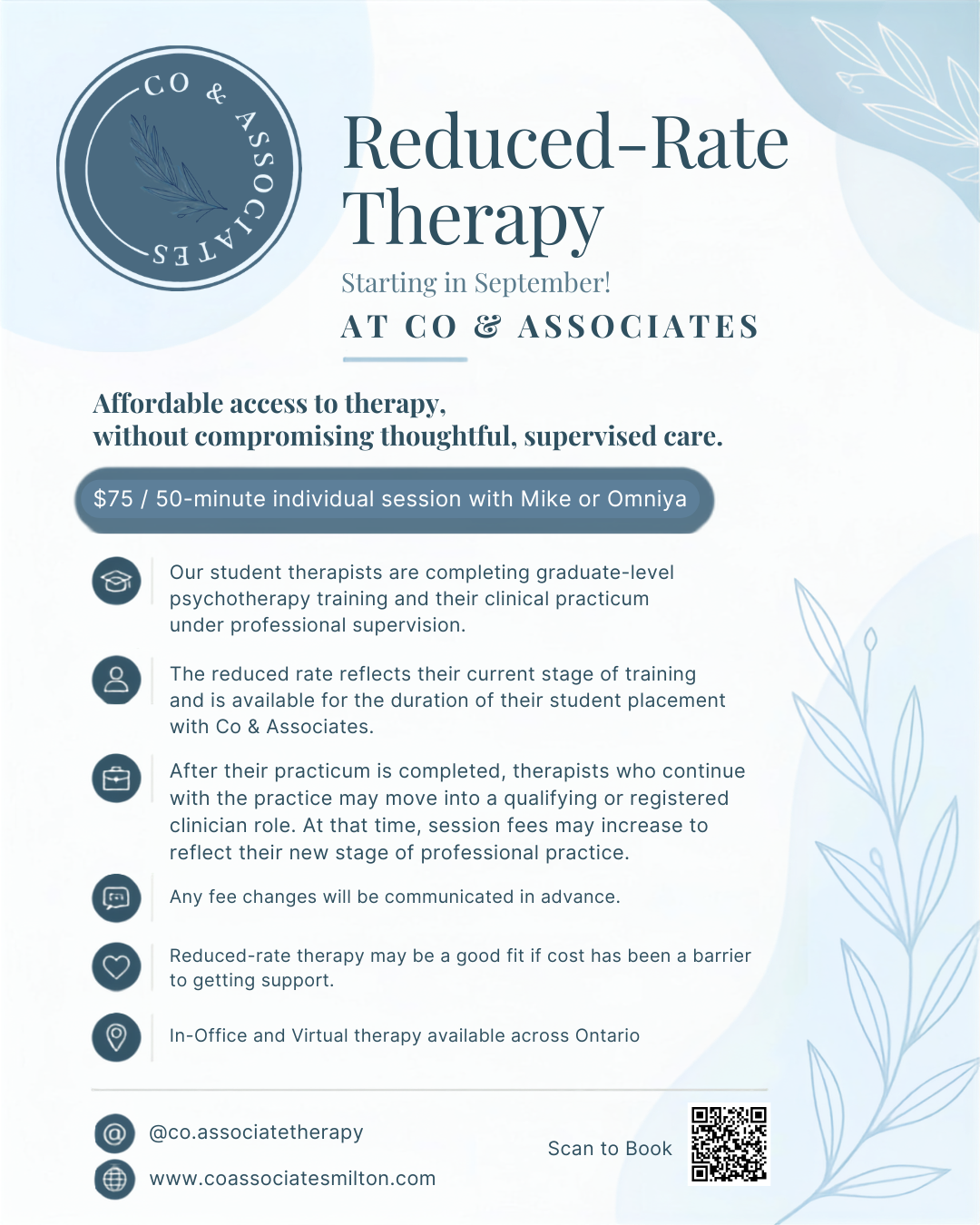
When people see the words “student therapist,” they sometimes wonder what that actually means.
Are they qualified to provide therapy?
Will my sessions be different?
Who supervises them?
And perhaps most importantly: why is the fee lower?
These are good questions—and we think clients deserve transparent answers.
At Co & Associates, we offer clients the option of working with select student therapists at a reduced rate. We do this for two important reasons: to make psychotherapy more financially accessible and to participate responsibly in the education and development of the next generation of mental health professionals.
The reduced fee reflects where a student therapist is in their professional training.It does not mean your care matters less.
What Is a Student Therapist?
A student therapist isn't simply someone who is interested in becoming a therapist.
They are completing formal education and supervised clinical training toward becoming a mental health professional.
Their placement at a psychotherapy practice is part of that education: an opportunity to take what they have learned academically and develop the clinical skills required to work thoughtfully and responsibly with real people and real human experiences.
They are learning how to sit with complexity.
How to listen beyond the obvious.
How to develop therapeutic relationships.
How to translate psychological theory into meaningful clinical work.
And how to continually reflect on their own practice.
Importantly, they aren't expected to do this alone.
Student Therapists Receive Clinical Supervision
One of the most important things to understand about working with a student therapist is that their clinical development is supervised.
Supervision provides a structured space for student therapists to think carefully about their clinical work, develop their skills, consider different perspectives, identify areas for further learning, and ensure they are practising within the appropriate scope of their training.
That means a student therapist isn't simply handed a caseload and expected to figure everything out independently.
Good clinical training should involve curiosity, reflection, consultation, accountability, and a willingness to keep learning. Those aren't qualities we expect therapists to leave behind once they graduate, either. They are part of becoming—and continuing to be—a thoughtful clinician.
So Why Is Therapy with a Student Therapist Less Expensive?
This distinction matters. The reduced rate reflects the clinician's stage of professional training—not the value of the client's concerns or the importance of the therapy.
Student therapists are still developing their clinical experience and working toward the professional credentials they will eventually hold independently. Charging a reduced fee acknowledges that difference while also creating an opportunity to make private psychotherapy available at a lower cost.
For some clients, standard private psychotherapy fees simply aren't financially sustainable.
They may not have extended health benefits.
Their benefits may have been exhausted.
They may have limited coverage.
Or therapy may be one of many important expenses competing for a finite amount of income.
The reality is that needing therapy and being able to afford therapy are two very different things. Offering reduced-rate sessions with student therapists is one way we can help narrow that gap.
Reduced Rate Shouldn't Mean Reduced Expectations
We also don't believe that offering lower-cost therapy means lowering our expectations of the therapeutic experience.
Clients working with student therapists deserve the same things every client deserves:
To be treated with dignity.
To have their experiences taken seriously.
To understand the boundaries and expectations of therapy.
To know who they are working with and that person's professional status.
To have informed consent.
To ask questions.
To provide feedback.
And to feel that the person sitting across from them is genuinely engaged in understanding them. Being a student shouldn't be hidden or minimized. Clients should know when their therapist is completing a clinical placement and understand what that means.
Transparency is part of ethical care.
There Can Also Be Something Valuable About Working with Someone Who Is Learning
Experience matters in psychotherapy. But experience isn't the only quality that matters.
Student therapists can also bring something valuable to the therapeutic relationship: curiosity.
They are actively immersed in learning.
They are reading.
They are discussing theory.
They are receiving feedback.
They are developing their clinical thinking.
They are being asked to examine why they intervene the way they do rather than simply relying on habit.
That doesn't automatically make a student therapist the right fit for every client.
But neither does having many years of experience automatically make any therapist the right fit for every client. Therapeutic fit is more nuanced than a résumé.
Is a Student Therapist Right for Everyone?
No—and we think it's important to say that clearly. Reduced-rate therapy should never mean placing every client with a student therapist simply because it costs less.
Different therapists have different levels of training, experience, competence, and scope of practice. Some client concerns or clinical situations may require a clinician with more specialized training or experience.
Part of responsible care is recognizing when a student's current level of training is appropriate for a client's needs—and when it isn't. There may also be clients who simply feel more comfortable working with an experienced registered professional.
That's okay. The purpose of offering student therapists isn't to replace experienced clinicians. It's to create another pathway into therapy.
Accessibility Without Devaluing Therapy
Conversations about affordable therapy can become complicated. Therapists deserve to be compensated fairly for skilled professional work.
At the same time, we know private psychotherapy can be financially inaccessible for many people. Both things can be true. Student placements create one way of offering a lower-fee option without pretending that the work of trained, experienced clinicians has no value.
They also allow established practices to participate in something we believe matters deeply: developing future clinicians thoughtfully rather than expecting them to somehow emerge from school already knowing how to do this work.
Someone taught every experienced therapist how to become a therapist.
Someone supervised them.
Someone challenged their thinking.
Someone gave them feedback.
And, importantly, clients trusted them while they were learning.
Training Future Therapists Is Part of Caring for the Future of Mental Health Care
We don't see student placements only as an affordability initiative. We also see them as a responsibility to our profession. The quality of mental health care available tomorrow depends, in part, on how we train clinicians today. We want emerging therapists to learn that good therapy isn't about having the perfect response.
It's about curiosity.
Humility.
Ethical practice.
Critical thinking.
Self-reflection.
Understanding difference.
Recognizing the limits of your competence.
Being willing to consult.
And remembering that behind every theory, diagnosis, treatment plan, and clinical note is a person trusting you with a part of their life. Those lessons aren't learned from textbooks alone. They develop through education, clinical experience, supervision, reflection, and relationships.
More Ways to Access Support
Offering reduced-rate therapy with student therapists is one way Co & Associates is working to create more options for people seeking mental health support.
For some clients, working with an experienced registered therapist will be the best fit. For others, a student therapist may provide an accessible entry point into therapy and a therapeutic relationship that works exceptionally well for them.
Neither choice says anything about how deserving someone is of care. And choosing a reduced-rate option shouldn't mean believing you are receiving a lesser version of therapy. It means choosing from the options available and finding the kind of support that makes sense for you.
Reduced rate doesn't mean reduced care.
It means making room for both accessibility and learning—and recognizing that thoughtful therapists aren't simply educated.
They are developed.
This article is intended for educational and informational purposes only. It is not a substitute for therapy, counselling, or individualized mental health care. Everyone's experiences are unique, and support that works for one person may not be right for another. If you're struggling, we encourage you to seek professional support that fits your needs.
Related Articles
.png)
Exciting News at Co & Associates Therapy
Exciting news! We're thrilled to welcome Sarah back to our Milton office, offering both in-person and virtual therapy. Discover how her compassionate care can support your well-being.
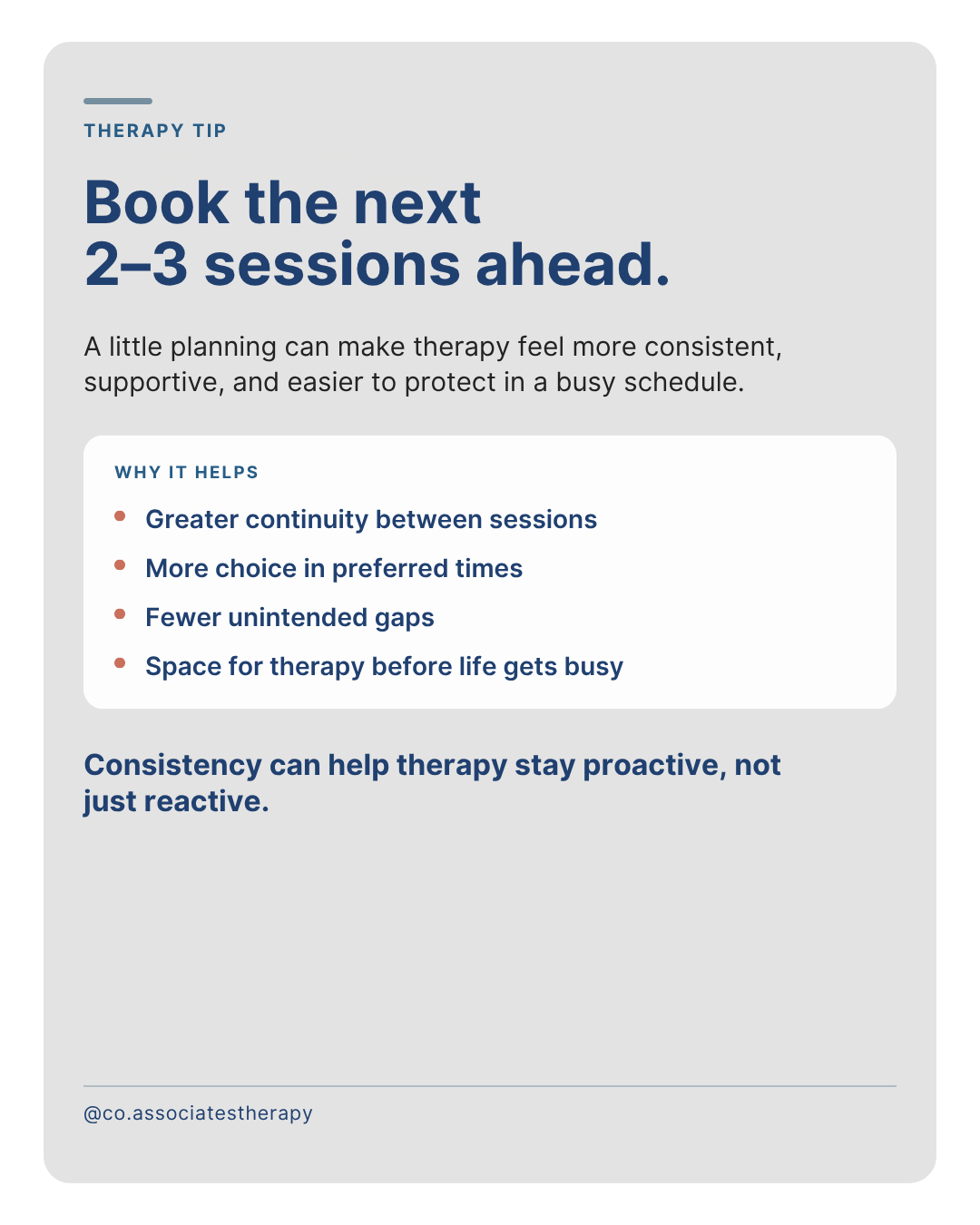
Why Booking Therapy Ahead Can Actually Help Therapy Work Better
One of the things we sometimes encourage clients to do is book a few therapy sessions in advance. And we also understand why people hesitate. Life is busy. Work...

Our Team Is Growing — With Intention
We are thrilled to welcome three new clinicians to Co & Associates this fall! Discover how our intentional growth helps us better support your unique mental health journey.