
 The Collab Journal
By Garion Sparks-Austin, BSW, RSW — Registered Social Worker, Psychotherapist

If your therapy benefits have run out and you're worried about how you'll afford counselling or psychotherapy, you're not alone.
Many individuals, couples, and families across Ontario are feeling the strain of rising living costs. Between housing expenses, groceries, childcare, transportation, and other financial pressures, it can feel overwhelming to prioritize your mental health when money is tight.
At the same time, emotional struggles don't pause simply because insurance coverage ends.
For many people, benefits run out long before they feel ready to end therapy. If that's where you are right now, we want you to know two things:
Your concerns are valid.
And you have options.
Why Do Therapy Benefits Run Out Before Therapy Is Finished?
Most extended health benefit plans provide a fixed annual amount for psychotherapy, counselling, social work, or mental health services.
Unfortunately, healing doesn't always follow an insurance calendar.
Whether you're working through anxiety, depression, burnout, relationship challenges, trauma, grief, parenting stress, or major life transitions, meaningful change often takes time.
Running out of benefits doesn't mean you've failed therapy. It doesn't mean you're "too much" or taking too long.
In many cases, it simply means you've used the coverage available to you while doing important work.
If You Can't Afford Weekly Therapy, Talk To Your Therapist
One of the biggest misconceptions we see is that therapy is either "weekly" or "not at all."
In reality, there are many ways to continue receiving support while reducing costs.
Your therapist may be able to help you create a plan that includes:
Transitioning to Biweekly or Monthly Sessions
As clients make progress, many move from weekly sessions to biweekly or monthly maintenance appointments.
This allows you to continue receiving professional support while reducing the overall financial investment.
Focusing on Key Goals
Sometimes a shorter-term, goal-focused approach can help clients prioritize the most pressing concerns while remaining mindful of their budget.
Creating a Relapse Prevention Plan
Therapy isn't only about crisis management. It can also be about helping you maintain the progress you've already made.
Periodic check-ins can help reinforce coping strategies, identify warning signs early, and provide accountability.
Returning When Needed
Some clients choose to pause therapy and return during periods when additional support is needed.
Mental health care doesn't have to be all-or-nothing.
Why Don't Therapy Fees Change Significantly When Benefits End?
This is a fair question—and one many people wonder about.
The cost of therapy is not determined by whether insurance is covering the session. The fee reflects the professional service being provided.
Behind every therapy session are many responsibilities that clients don't always see, including:
Professional licensing and regulatory requirements
Ongoing education and specialized training
Clinical consultation and supervision
Documentation and record keeping
Privacy-compliant technology and secure systems
Administrative support and practice operations
Time spent preparing for and coordinating client care
Just as the cost of medical, dental, legal, or accounting services remains the same regardless of insurance coverage, the professional costs associated with psychotherapy remain constant.
This doesn't make financial stress any less real.
It simply means that therapists, like many professionals, must balance accessibility with maintaining a sustainable practice that allows them to continue providing ethical, high-quality care.
The Cost Of Therapy Versus The Cost Of Untreated Mental Health
When finances are tight, therapy can understandably feel like a luxury.
Yet many people discover that untreated anxiety, chronic stress, burnout, depression, relationship conflict, or unresolved trauma can create costs in other areas of life, including:
Increased medical concerns
Reduced workplace productivity
Missed work or sick leave
Strained relationships
Emotional exhaustion
Difficulty parenting or caregiving
Increased crisis intervention needs
Mental health care is healthcare.
And seeking support is not a sign of weakness—it is often a proactive investment in your overall well-being.
Affordable Mental Health Support: Other Options To Consider
If ongoing private therapy isn't financially feasible right now, consider exploring:
Community mental health organizations
Employee Assistance Programs (EAPs)
Low-cost counselling programs
Group therapy programs
Workshops and psychoeducational groups
Student training clinics
Community agencies and nonprofit services
A good therapist will support you in finding resources that fit your needs—even if those resources are outside of their own practice.
You Don't Need To Navigate This Alone
If your benefits have run out and you're feeling discouraged, we encourage you not to make assumptions about what comes next.
Have an honest conversation with your therapist.
Together, you can discuss your goals, your financial realities, and the options available to help you continue receiving support in a way that feels manageable.
At Co & Associates, we understand that many Ontario individuals and families are carrying significant financial stress right now. We also know that mental health challenges don't disappear when insurance coverage ends.
You deserve compassionate, accessible support—and a conversation about what is possible moving forward.
Because healing shouldn't stop simply because your benefits have.
This article is intended for educational and informational purposes only. It is not a substitute for therapy, counselling, or individualized mental health care. Everyone's experiences are unique, and support that works for one person may not be right for another. If you're struggling, we encourage you to seek professional support that fits your needs.
Related Articles
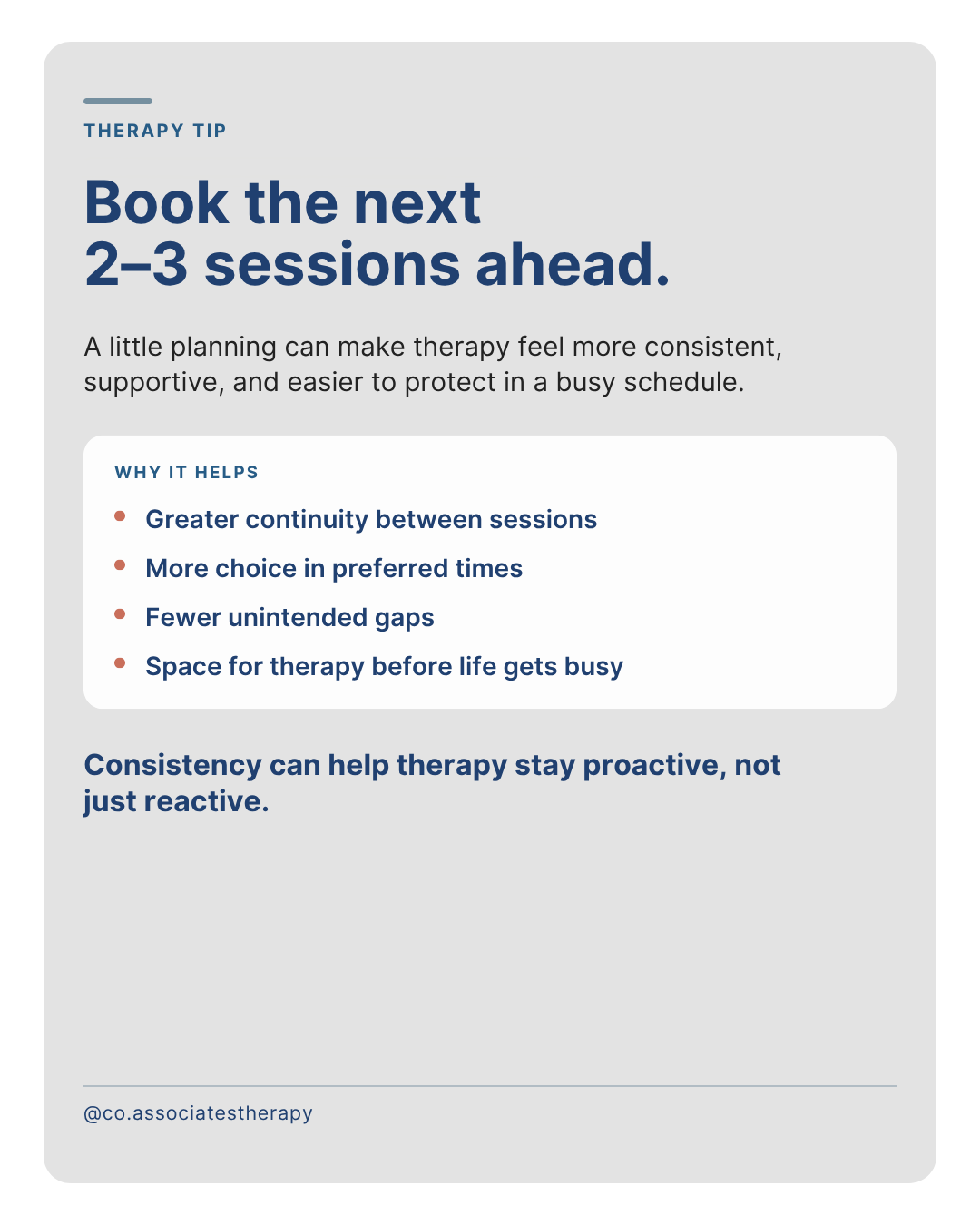
Why Booking Therapy Ahead Can Actually Help Therapy Work Better
One of the things we sometimes encourage clients to do is book a few therapy sessions in advance. And we also understand why people hesitate. Life is busy. Work...

When Starting Over Comes With More Than You Expected: Mental Health, Immigration, Identity & Belonging
Navigating a new chapter comes with hidden grief and complex identity shifts. Discover how therapy can support your journey of belonging.

Embracing Change, Together
Embrace change with Co & Associates! Discover how we're navigating organizational shifts to strengthen our commitment to your well-being. Learn how growth emerges from new beginnings.