
 The Collab Journal
By Garion Sparks-Austin, BSW, RSW — Registered Social Worker, Psychotherapist

Every June, Men's Mental Health Month offers an opportunity to shine a light on a topic that has remained in the shadows for far too long.
While conversations about mental health have become more common in recent years, many men continue to face unique barriers when it comes to acknowledging emotional struggles and seeking support. Despite experiencing anxiety, depression, burnout, grief, relationship challenges, trauma, and overwhelming stress, many men delay reaching out for help—often until they feel they have reached a breaking point.
This month serves as an important reminder that mental health challenges do not discriminate and that no one should have to navigate them alone.
The Reality of Men's Mental Health
Men experience many of the same mental health concerns as women, but they often experience, express, and cope with them differently.
Instead of openly discussing emotional distress, men may be more likely to:
Withdraw from relationships
Become increasingly irritable or angry
Throw themselves into work or responsibilities
Use alcohol or substances to cope
Avoid discussing difficult emotions
Minimize their struggles
Feel pressure to "push through" rather than seek support
Unfortunately, these coping strategies can sometimes mask underlying mental health concerns, making it more difficult for both men and those around them to recognize when support is needed.
The reality is that struggling does not make someone weak. It makes them human.
Why Breaking the Stigma Matters
Many men grow up receiving messages—both directly and indirectly—that emotional vulnerability is something to avoid.
Messages such as:
"Man up."
"Don't cry."
"Be strong."
"Handle it yourself."
"Other people have it worse."
While often well-intentioned, these messages can teach men that emotions should be suppressed rather than explored.
Over time, this can create a harmful belief that seeking support is a sign of failure, weakness, or inadequacy.
The truth is that emotional wellbeing is not achieved through avoidance. It is developed through awareness, connection, and support.
When men seek help, they are not giving up. They are taking an active role in caring for themselves, their relationships, and their future.
Every time a man reaches out for support, he helps challenge outdated beliefs and creates space for others to do the same.
Common Barriers That Prevent Men From Seeking Support
"I Should Be Able to Handle This On My Own"
Many men pride themselves on being independent and capable problem-solvers.
While resilience is valuable, there is a difference between healthy independence and carrying everything alone.
We often seek professional support for our physical health, finances, legal matters, and careers. Mental health deserves the same level of care and attention.
Fear of Being Judged
Some men worry about how others may perceive them if they seek therapy.
They may fear being viewed as weak, incapable, or unable to cope.
In reality, many people who seek therapy are highly capable individuals who recognize the value of support, insight, and growth.
Not Knowing What to Expect
For someone who has never attended therapy before, uncertainty can feel intimidating.
Questions like:
What will I have to talk about?
What if I don't know what to say?
Will I be judged?
Will I have to discuss things I'm not ready to talk about?
These concerns are common and understandable.
Lack of Time
Work, parenting, caregiving, and other responsibilities can make therapy feel like "one more thing" on an already full plate.
Ironically, these same responsibilities often contribute to the stress, burnout, and emotional exhaustion that therapy can help address.
What Can Men Expect When Starting Therapy?
One of the biggest misconceptions about therapy is that clients are expected to immediately share their deepest vulnerabilities.
That is rarely how therapy works.
Therapy is a collaborative process that moves at a pace that feels safe and manageable.
During early sessions, many conversations focus on:
What is bringing you to therapy
Current stressors and challenges
Goals for therapy
Relationships and support systems
Coping strategies that are helping—or no longer helping
There is no "right way" to do therapy.
Some men come to therapy to address anxiety or depression.
Others come to improve communication, navigate relationship challenges, process grief, recover from burnout, heal from trauma, strengthen parenting skills, or simply gain a better understanding of themselves.
You do not need to be in crisis to benefit from therapy.
Practical Ways to Overcome Barriers
If seeking support feels overwhelming, consider starting small.
Reframe What Therapy Means
Instead of viewing therapy as something people do when they are struggling, consider viewing it as something people do to invest in themselves.
Therapy is not just about surviving difficult times—it is about building healthier ways of coping, relating, and living.
Start With Curiosity
You do not need to commit to long-term therapy right away.
Many people begin with a consultation or a few sessions to explore whether it feels helpful.
Focus on Your Goals
Ask yourself:
What would I like to feel differently?
What is currently not working?
What would improve my quality of life?
Often, these questions provide more clarity than focusing solely on symptoms.
Remember That Strength Includes Asking for Help
Strength is not the absence of struggle.
Strength is recognizing when support could be beneficial and being willing to take that step.
A Message to the Men Who Are Struggling
If you have been carrying stress, anxiety, grief, burnout, loneliness, relationship challenges, or emotional pain on your own, know that you do not have to continue doing so.
You do not need to wait until things become unbearable.
You do not need to have all the answers before reaching out.
And you do not need to earn support by suffering long enough.
Seeking help is not a sign that you have failed.
It is a sign that you are choosing to care for yourself in a meaningful way.
This Men's Mental Health Month, let's continue challenging the stigma that keeps so many men silent and remind ourselves that mental health is human health.
Everyone deserves support—including men.
This article is intended for educational and informational purposes only. It is not a substitute for therapy, counselling, or individualized mental health care. Everyone's experiences are unique, and support that works for one person may not be right for another. If you're struggling, we encourage you to seek professional support that fits your needs.
Related Articles
.png)
Finding a therapist who understands your cultural experiences shouldn't mean having to explain every part of your upbringing
Discover culturally attuned therapy in Milton and across Ontario. Connect with our team for compassionate support that truly understands your unique background.
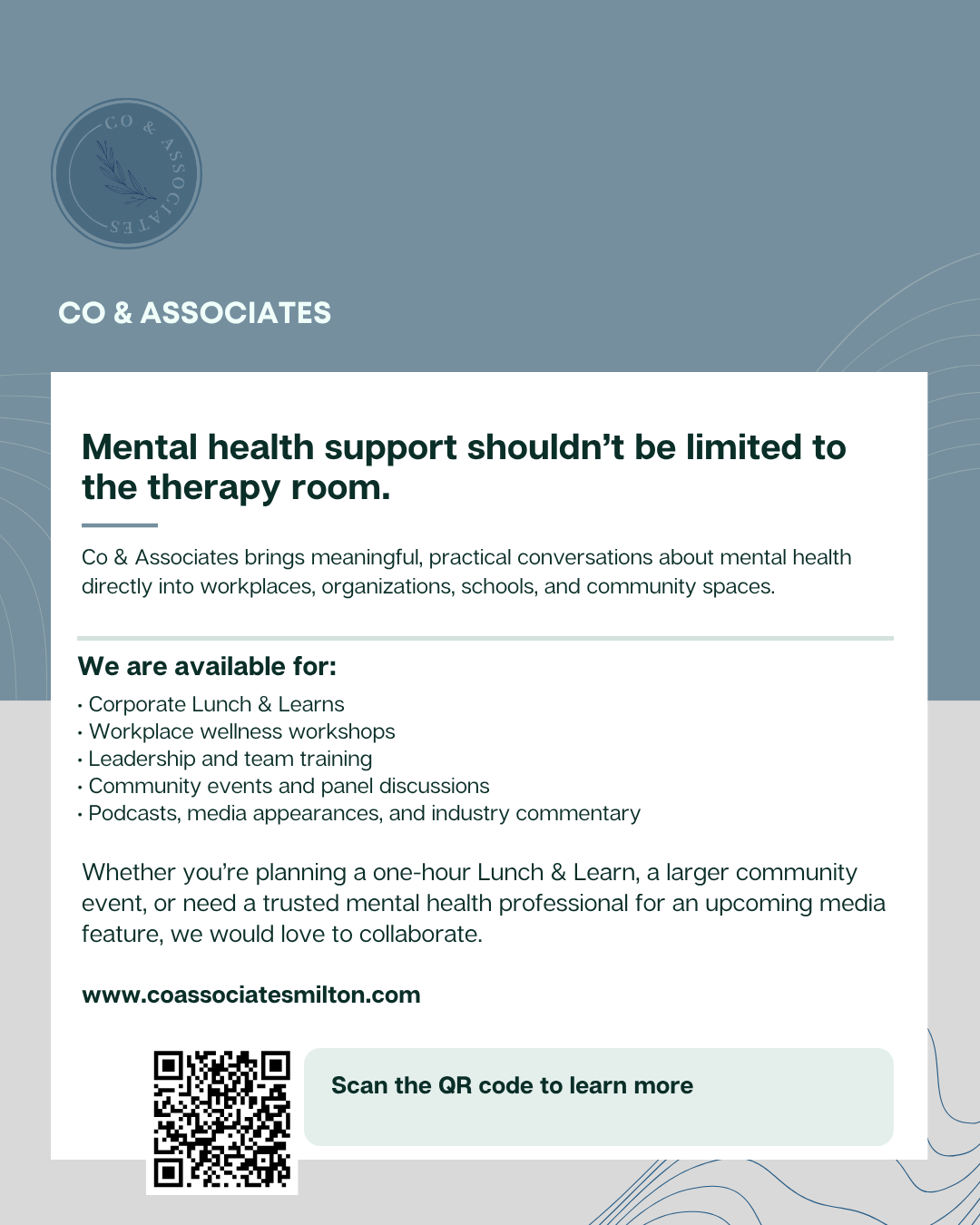
Mental Health Beyond the Therapy Room: Bringing Meaningful Conversations Into the Workplace
Discover how Co & Associates brings practical mental health education and tailored wellness training directly to Milton workplaces to build healthier, more resilient teams.
Suicide Prevention Awareness Month: Sometimes the Most Important Thing We Can Do Is Ask
Learn how to spot hidden signs of distress, navigate difficult conversations, and support loved ones during Suicide Prevention Awareness Month.